
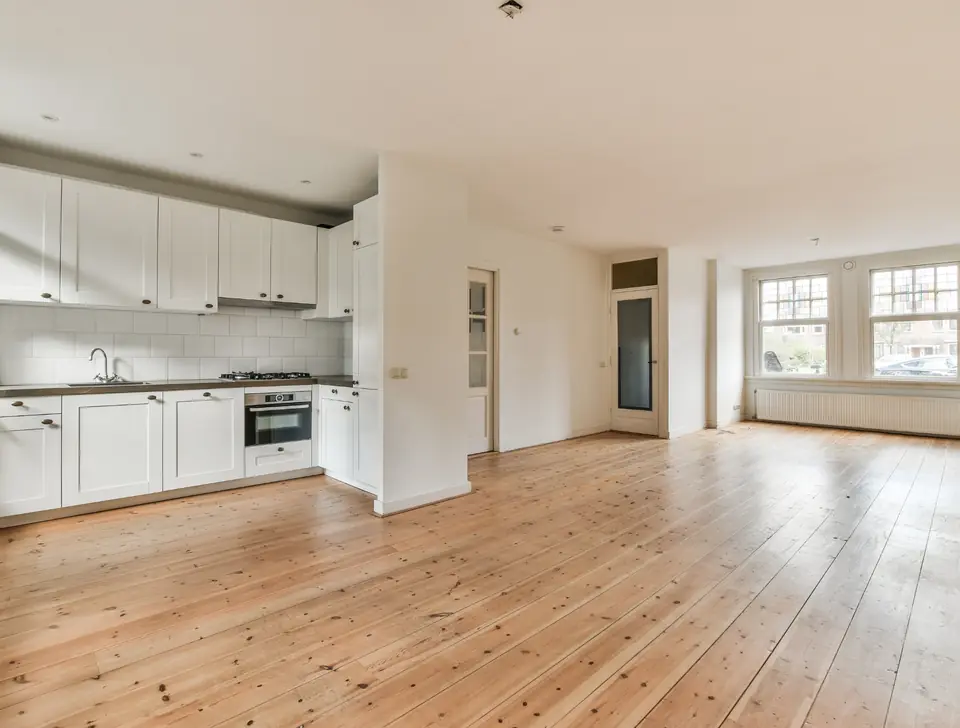
If you live in Dallas, Fort Worth or almost any suburb in between, there is a very good chance your home sits on a concrete slab. Slab foundations dominate North Texas construction because they are cost effective and work well with our climate. They also shape which floors will perform well for decades and which will give you trouble after the first humid summer.
At Paradise Spaces we install floors on slabs every week, from 1970s ranch homes in Garland to brand new construction in Frisco. This guide explains what makes slabs different, which products work best, and how to choose for each room in your home.
Why concrete slabs change the flooring decision
A concrete slab is not a dry, inert surface. Concrete is porous, and moisture from the ground below can move up through it as vapor. New slabs also release water for months as they cure. When that moisture reaches a moisture-sensitive floor such as solid hardwood or standard laminate, boards can swell, cup or grow mold underneath.
Slabs are also hard and unforgiving. Any high spots, low spots or cracks telegraph through thin floors and can cause rigid materials like tile to crack. And in DFW, the expansive clay soil under many neighborhoods swells after heavy rain and shrinks during drought, which means slabs can move slightly over time.
The best flooring for Texas slab homes therefore has three qualities:
- It tolerates moisture vapor or can be installed over a proper barrier
- It is dimensionally stable through humidity swings
- It can be installed flat on the slab without needing nails
The top performers on concrete slabs
Luxury vinyl plank and tile
Luxury vinyl is the most forgiving floor you can put on a slab. Rigid core products (SPC and WPC) are waterproof, so slab moisture will not swell them, and their click-lock systems float over the concrete without adhesives. An attached pad adds comfort and sound control. For kitchens, laundry rooms, bathrooms and homes with pets, it is hard to beat.
Watch for wear layer thickness (20 mil or more for busy households), a quality attached underlayment, and planks long enough to make open floor plans look calm.
Engineered hardwood
If you want real wood on a slab, engineered hardwood is the smart choice. Its cross-laminated plywood core resists the expansion and contraction that make solid boards cup. It can be glued directly to a flat, dry slab or floated over a moisture barrier and underlayment. Wide planks of 7 inches or more, which are popular right now, are far more stable in engineered construction than in solid wood.
Porcelain tile
Porcelain tile is impervious to moisture, stays cool during Texas summers and lasts for decades. The key is preparation: the slab must be flat, and cracks or areas of movement should be covered with an uncoupling membrane so cracks in the concrete do not transfer into the tile. Wood-look porcelain planks give you a hardwood appearance with tile durability.
Laminate, with the right prep
Modern laminate works well on slabs when installed over a 6 mil polyethylene vapor barrier or an underlayment with an integrated barrier. Water-resistant collections add protection against spills. Laminate is a great value for bedrooms, living rooms and offices.
Carpet
Carpet is still a favorite for bedrooms and game rooms. On slabs, a quality pad with a moisture barrier makes a noticeable difference in comfort and helps protect the carpet backing.
What to avoid or approach with care
Solid hardwood glued directly to concrete. Some solid products are rated for glue-down on slabs, but most solid hardwood should not go directly on concrete in North Texas. If you love solid wood, it typically requires a plywood subfloor over the slab, which raises floor height and cost.
Skipping the moisture test. This is the most common cause of failed floors we are called to fix. We test every slab with a moisture meter and, when needed, calcium chloride or relative humidity tests, then choose the right barrier.
Ignoring flatness. Most manufacturers specify a tolerance such as 3/16 inch over 10 feet. Floors that are not flat can cause clicking, separating joints and hollow sounds. Grinding high spots and using self-leveling compound in low spots is part of a proper installation.
Choosing room by room
| Room | Our usual recommendation |
|---|---|
| Kitchen | Luxury vinyl or porcelain tile; engineered hardwood with rugs if you prefer wood |
| Living and dining | Engineered hardwood, luxury vinyl or laminate |
| Bedrooms | Carpet, engineered hardwood or laminate |
| Bathrooms and laundry | Porcelain tile or waterproof luxury vinyl |
| Entry and mudroom | Porcelain tile or luxury vinyl |
| Game room and kids' spaces | Luxury vinyl or carpet |
Many DFW homeowners choose one continuous floor throughout the main living areas, which makes the home feel larger and eliminates transitions. Luxury vinyl and engineered hardwood are both excellent for that approach.
How foundation movement affects your choice
If your home has had foundation repair, or you can see cracks in drywall, sticking doors or cracks in the slab, mention it during your estimate. Floating floors such as luxury vinyl and laminate tolerate minor movement better than tile. If you prefer tile, an uncoupling membrane and correctly placed movement joints are essential.
The bottom line
For most Texas slab homes, waterproof luxury vinyl, engineered hardwood and porcelain tile are the safest high-performing choices, with laminate and carpet as excellent options for drier rooms. The product is only half the story, though. Moisture testing, flattening and installation to the manufacturer's specifications are what make a floor last.
Paradise Spaces offers free in-home estimates across Dallas Fort Worth, with moisture testing and a written quote backed by our price match guarantee. Request your estimate or call (214) 903-4378.
Need help with your project?
Paradise Spaces provides flooring installation services and free in-home estimates across Dallas Fort Worth. Call (214) 903-4378 or request a quote online.
Frequently Asked Questions
Can I put hardwood floors on a concrete slab in Texas?
Yes. Engineered hardwood can be glued down or floated over a moisture barrier on a slab. Solid hardwood usually needs a plywood subfloor first.
Is luxury vinyl good on concrete slabs?
Yes. Rigid core luxury vinyl is waterproof and floats over the slab, which makes it one of the best options for DFW slab homes.
Do new slabs need extra drying time?
New concrete can release moisture for many months. We test moisture and use the appropriate barrier or adhesive before installing moisture-sensitive floors.
Comments
Loading comments...